
STEP 9
Axle Shafts
Most of the foundation sequence addresses problems that cause inconvenience, poor performance, or accelerated wear. The AMC 20 rear axle shaft design is different. It has a known failure mode that causes a sudden, complete loss of rear drive power with no warning -- on dry pavement, at highway speeds, under entirely normal driving conditions. Every CJ with the factory two-piece axle shafts is carrying this risk until the conversion is done.
If the rear differential fluid in Step 1 came out with metallic contamination beyond normal wear, the splines may already be degrading. That finding moves Step 9 up in priority. If the fluid looked clean, the shafts are likely still intact -- but the underlying design weakness remains. This step covers how the failure happens, what to watch for, and the conversion kits that permanently solve it.
For the full failure story and a detailed look at how the AMC 20 two-piece design fails in the real world, see our AMC 20 Axle Failure Guide. This step covers the decision framework and upgrade path.
The AMC 20 Two-Piece Axle Design
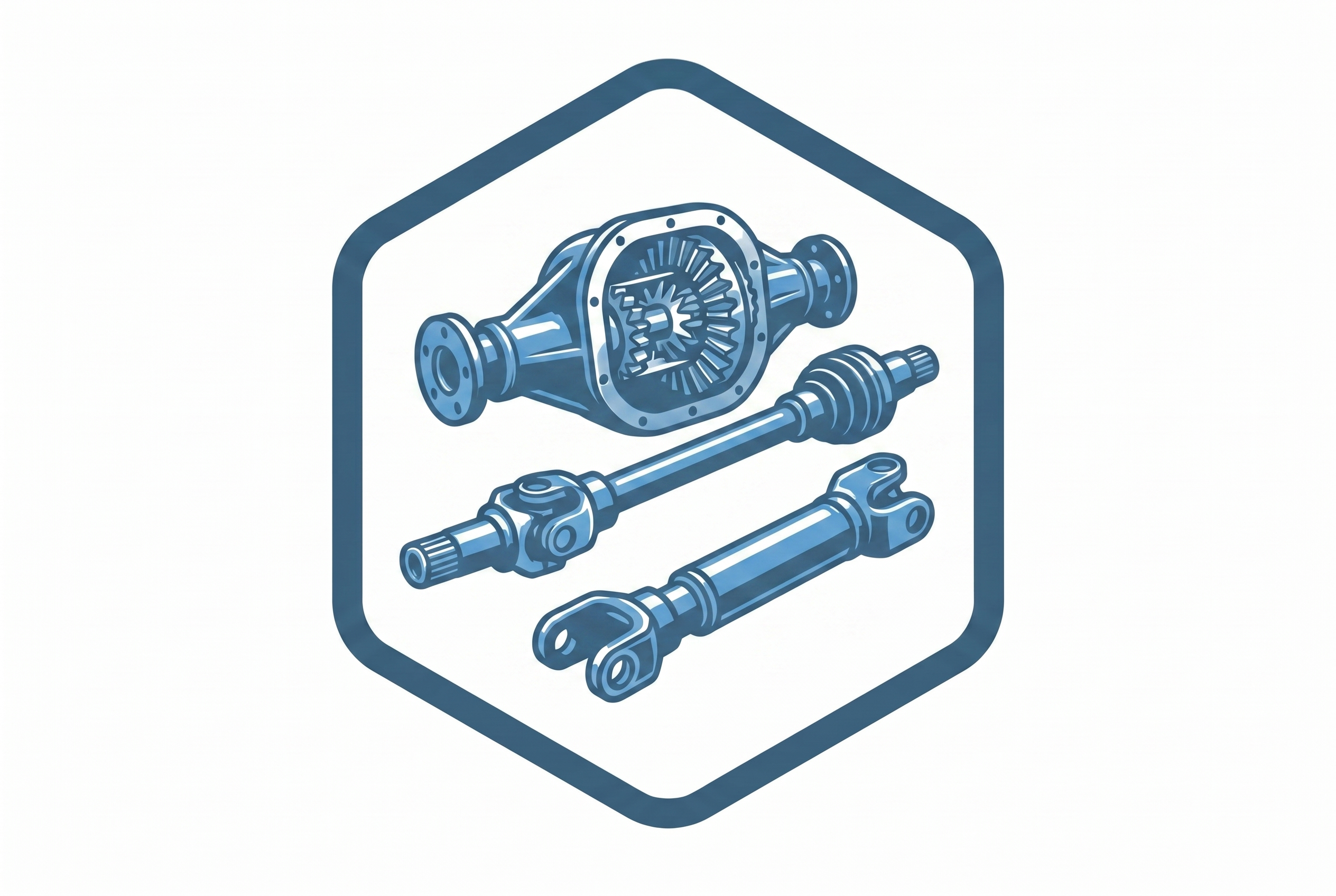
The factory AMC 20 rear axle features a two-piece design: a splined axle shaft and a separate wheel hub, held together by a large center nut torqued to a minimum of 250 ft-lbs. This extreme clamping force causes the hardened splines of the shaft to seat into the softer metal of the hub, creating an interference fit. The integrity of the entire assembly depends entirely on the tension of that single nut.
Over years of service -- particularly under high-torque loads, or if the nut was ever under-torqued during a brake job -- the hub can begin to work microscopically against the shaft. Once the fit becomes even slightly loose, the splines inside the hub wear down. Eventually the hub strips or spins: the axle shaft rotates freely while the hub stays stationary. Drive power to that wheel is gone.
Warning Signs: What to Look and Listen For
The final failure often feels sudden, but there are usually early indicators if you know what to look for.
Listen for a metallic click or clunk when transitioning from a stop or shifting between forward and reverse. This is spline movement -- the hub working against the shaft under torque reversal. It may come and go at first and become more consistent as wear progresses.
Pull the center dust cap and look inside. Fine red or brown dust inside the hub is oxidized metal from splines grinding against each other. If you find it, failure is not a matter of if -- it is when. Do not drive the Jeep until the shafts are replaced.
The One-Piece Conversion: The Permanent Fix
The industry-standard solution is one-piece axle shafts. This replaces the separate hub and shaft with a single solid unit, permanently eliminating the spun hub failure mode. Once one-piece shafts are installed, the AMC 20 becomes a very capable axle -- often considered stronger than a Dana 44 due to its larger ring gear diameter. This is a safety upgrade that allows you to confidently run 33-inch or larger tires on the street and trail.
Choosing Your One-Piece Kit
We stock two one-piece options for the AMC 20, and they are a real choice rather than a fake good-better split. Here is the honest comparison.
RT Off-Road One-Piece Kit -- the value option
These shafts are 4340 alloy steel, heat treated, which RT rates at roughly 30 percent stronger than the factory shaft in both tensile and torsional strength. The splines are rolled, not cut. Rolled splines are formed by pressing the metal rather than machining it away, which preserves the grain structure and adds strength right where the shaft does its work. The kit is flanged one-piece, includes both axles, bearings, seals, and retaining rings, and is made in the USA.
Shop RT Off-Road One-Piece Kits →
Yukon Gear and Axle One-Piece Kit -- the name-brand option
These shafts are 1541H steel, heat treated -- a proven medium-carbon steel widely used for stock-replacement one-piece shafts. The kit includes both axles, bearings, seals, retainers, wheel studs, and silicone. Yukon is one of the most recognized names in the axle business, with a deep reputation and broad support behind it.
Shop Yukon Gear One-Piece Kits →
Here is the part most parts sites would not tell you. On material spec alone, the less expensive RT Off-Road kit uses the higher-grade alloy. 4340 chromoly is a stronger material than 1541H, and rolled splines are a real advantage. So this is not a simple case of paying more for a better part. What you are actually choosing between is a USA-made kit with a stronger material spec at a lower price, and a kit from one of the best-known brands in the business with full hardware included. Both fully solve the spun-hub problem. If you want the strongest shaft for the money, the RT kit makes a strong case. If brand reputation and a known support history matter more to you, Yukon earns its premium. Neither is the wrong answer.
One Warning Before You Shop
If you compare prices around the web, you will run into budget shafts advertised as one-piece that are actually two pieces welded together. A hub welded to a shaft is not the same as a shaft machined as a single unit, and a weld is exactly the kind of stress concentration point that can fail under load. Before buying any one-piece kit anywhere, confirm two things: that it is forged or machined as one piece and not a welded assembly, and which type of spline it uses -- rolled splines are stronger than cut. Both kits we carry are true one-piece shafts. We mention the welded fakes so you can shop with confidence, not just buy from us.
Confirm Fitment Before You Order
AMC 20 axles changed over the years, including narrow track and wide track versions, and shaft length and application vary. Not every one-piece kit fits every CJ and Scrambler. Before you order, confirm the kit matches your exact year, model, and axle. If you are not sure which AMC 20 you have, contact us and we will help you sort it out before anything ships.
Front Axle: Dana 30 Inspection
While the rear axle has the most well-known weakness, the Dana 30 front axle requires its own checks. Jack up the front end and grab the tire at 12 and 6 o'clock and shake it. Any movement indicates loose or worn front wheel bearings that need immediate service.
While you are there, inspect the front axle U-joints inside the knuckles. Look for rust dust around the caps or missing snap rings. A failed U-joint can bind the steering and leave you stranded.
Ball Joints
Ball joints are the pivot points that allow the front wheels to steer while remaining attached to the axle. To check them, lift the front tire off the ground and use a long pry bar under the tire to push it upward. Any visible or felt vertical movement in the steering knuckle means the ball joints are worn and need replacement before the Jeep is driven. This check was also noted in Step 6 as part of the steering inspection -- if you covered it there, note the results here.
Pinion Seals and Housing Integrity
Check the pinion seal where the driveshaft meets the axle housing on both front and rear. Oil dripping from the seal, or a yoke that can be moved up and down by hand, indicates bearing wear. On the AMC 20 specifically, inspect the area where the tubes are pressed into the center housing. Look for oil seeping at the seam or cracked welds. Under the stress of larger tires, these tubes can spin inside the housing -- which ruins suspension alignment and can lead to catastrophic housing failure.
Breather Tubes
Every axle has a rubber breather hose that allows air to escape as gear oil heats and cools with use. Follow the breather hose from each axle housing up to the frame. A clogged vent or cracked hose allows pressure to build inside the housing and forces gear oil out through the seals -- onto the brake shoes. Keeping the vents clear is a zero-cost task that prevents expensive seal replacements and keeps your brakes dry.
What Comes Next
Step 10 is the final step in the foundation sequence: verifying that your gearing matches your tires. If larger tires are part of the plan -- or already on the Jeep -- the gear ratio conversation determines how the Jeep drives, how the AMC 20 you just addressed is loaded, and whether the engine is working in the right RPM range for everyday use.
Continue to Step 10: Verify Your Gearing Matches Your Tires →
Or return to the CJ Foundation Checklist to review the full sequence.
Choosing Your One-Piece Kit
Once you have decided to convert, the next question is which kit. We stock two one-piece options for the AMC 20, and they are a real choice rather than a fake good-better split. Here is the honest comparison.
RT Off-Road One-Piece Kit, the value option.
These shafts are 4340 alloy steel, heat treated, which RT rates at roughly 30 percent stronger than the factory shaft in both tensile and torsional strength. The splines are rolled, not cut. Rolled splines are formed by pressing the metal rather than machining it away, which preserves the grain and adds strength right where the shaft does its work. The kit is flanged one-piece, includes both axles, bearings, seals, and retaining rings, and it is made in the USA. Installation instructions are posted on the product page.
Yukon Gear and Axle One-Piece Kit, the name-brand option.
These shafts are 1541H steel, heat treated, a proven medium-carbon steel widely used for stock-replacement one-piece shafts. The kit includes both axles, bearings, seals, retainers, and wheel studs, plus silicone. Yukon is one of the most recognized names in the axle business, with a deep reputation and broad support behind it.
Here is the part most parts sites would not tell you. On material spec alone, the cheaper RT Off-Road kit uses the higher-grade alloy. 4340 chromoly is a stronger material than 1541H, and rolled splines are a real advantage. So this is not a simple case of paying more for a better part. What you are actually choosing between is a USA-made kit with a stronger material spec at a lower price, and a kit from one of the best-known brands in the business with full hardware included. Both fully solve the spun-hub problem. If you want the strongest shaft for the money, the RT kit makes a strong case. If brand reputation and a known support history matter more to you, Yukon earns its premium. Neither is the wrong answer.
One Warning Before You Shop
If you compare prices around the web, you will run into budget shafts advertised as one-piece that are actually two pieces welded together. A hub welded to a shaft is not the same as a shaft machined as a single unit, and a weld is a place that can fail. Before buying any one-piece kit, anywhere, confirm two things: that it is forged or machined as one piece and not a welded assembly, and which type of spline it uses, since rolled splines are stronger than cut. Both kits we carry are true one-piece shafts. We mention the welded fakes so you can shop with confidence, not just buy from us.
Confirm Fitment First
AMC 20 axles changed over the years, including narrow track and wide track versions, and shaft length and application vary. Not every one-piece kit fits every CJ and Scrambler. Before you order, confirm the kit matches your exact year, model, and axle. If you are not sure which AMC 20 you have, contact us and we will help you sort it out before anything ships.
Beyond the AMC 20: Front Axle Inspections
While the rear axle has the most famous weakness, the Dana 30 front axle requires its own set of checks. Jack up the front end and grab the tire at the 12 and 6 o’clock positions to shake it. Any movement indicates that your front wheel bearings are loose or worn and need immediate service. While you are there, inspect the front axle U-joints located inside the knuckles. Look for "rust dust" around the caps or missing snap rings, as a snapped U-joint can bind your steering and leave you stranded.
Front Ball Joint Integrity
The ball joints are the pivot points that allow your front wheels to steer while remaining attached to the axle. Over time, the internal nylon or metal seats wear down, creating "slop" in the steering. To check them, use a floor jack to lift the front tire off the ground and use a long pry bar under the tire to lift it upward. If you see or feel any vertical movement in the steering knuckle, the ball joints are worn.
Pinion Seals and Housing Integrity
Check the "pinion seal" where the driveshaft meets the axle housing on both the front and rear. If you see oil dripping or if you can wiggle the yoke up and down by hand, the bearings are likely failing. On the AMC 20 specifically, inspect the area where the tubes are pressed into the center "pumpkin." Look for leaking oil at the seam or cracked welds. Under the stress of larger tires, these tubes can actually spin inside the housing, which ruins your suspension alignment and can lead to a catastrophic housing failure.
Breather Tubes and Moisture Control
Every axle has a rubber breather hose that allows air to escape as the gear oil heats up. Follow these hoses from the axle housing up to the frame. If the vent is clogged with mud or the hose is cracked, pressure will build up inside the axle and force gear oil out through your seals and onto your brake shoes. Keeping these vents clear is a zero-cost task that prevents expensive seal replacements and ensures your brakes stay dry and functional.