Steering wander in a CJ-5, CJ-7, or CJ-8 is usually blamed on one part. A stabilizer. A steering box. "These old Jeeps just do that."
Sometimes they do. But most of the time, wander is your CJ telling you a simple truth: the steering system is not acting like one tight system anymore. Either parts are worn, the axle is shifting, or the geometry and alignment are not cooperating after a lift or tire change.
If you have not already, the CJ Foundation Checklist walks through all 10 systems in sequence. Steering is Step 6, but several earlier steps affect what you will find here.
What Steering Wander Actually Feels Like
Wander is that constant micro-correction at speed. Not death wobble. Not a hard pull. More like:
- The Jeep will not settle in the lane
- You are always nudging the wheel to keep it straight
- It feels worse on grooved pavement or in crosswinds
- It gets more noticeable after a lift or a tire size change
Wander can be looseness or alignment, but alignment only works when the hardware is honest.
1) Worn Components: Small Slop Becomes Big Wander
A CJ is a collection of simple mechanical connections. That is great right up until each one develops just a little play. Common wander contributors:
- Tie rod ends and drag link ends: delay between steering input and tire response
- Ball joints: especially after years of oversized tires and potholes
- Wheel bearings: looseness here can mimic steering play and change toe under load
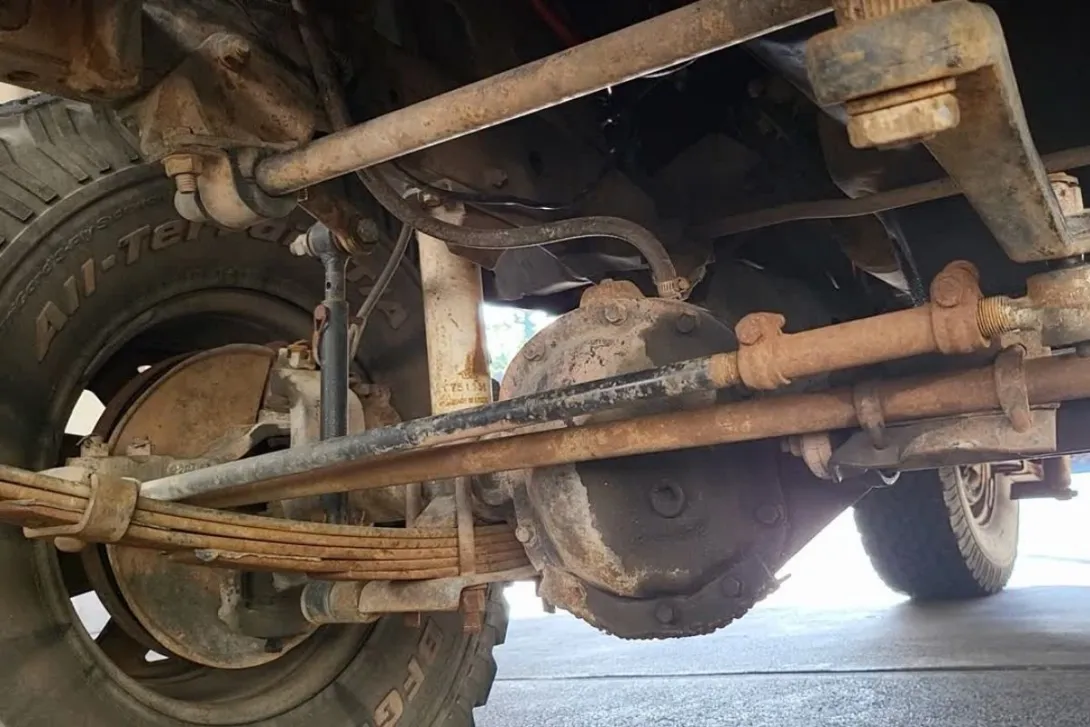
- Leaf spring and shackle bushings: the axle can shift slightly, which feels like steering wander
- U-bolts: if they are not tight, the axle is not located as firmly as you think
- Steering box mounting and frame: loose bolts or a cracking frame area can make the box steer the frame before it steers the tires
The Check That Beats Internet Arguments
Park on flat ground. Tires straight. Have a helper rock the steering wheel lightly left and right with small motions. Watch every joint from steering box to knuckles. You are looking for any point where the steering wheel moves but something downstream hesitates.
Wander is usually death by a thousand tolerances.
Safety note: If you can see a linkage joint shifting before it moves the next component, fix it before driving.
2) Worn Steering Shafts and Couplers: The Slop You Do Not See
Even with a tight front end, a CJ can still feel vague if the steering shaft, rag joint, or U-joints are worn. Symptoms often include:
- A dead zone on center
- A light clunk or delay before the steering box input moves
- The Jeep feels like it is always a half second behind you
Quick confirmation: rock the wheel gently and watch the steering box input. If the wheel moves but the box does not immediately follow, you have found a contributor.
If the steering wheel turns and nothing happens yet, the Jeep is not wandering. It is waiting.
3) Drag Link Angle and Bump Steer: When Suspension Travel Steers the Jeep
This is where many CJs start misbehaving after a lift. When a lift increases drag link angle, the link swings through a more aggressive arc as the suspension moves. That arc introduces steering input over bumps even when your hands are steady. That is bump steer in real life: the Jeep steering itself slightly as the axle cycles.
You will notice it as:
- Steering wheel tugs over dips
- The Jeep darts left or right when one side hits a bump first
- It feels worse on rough pavement than on smooth highway
What makes bump steer worse on a leaf-sprung CJ:
- Steep drag link angle
- Axle shift from tired spring or shackle bushings
- Loose U-bolts reducing clamping force
- Anything that allows the axle to move without the steering linkage matching that movement
A stabilizer can hide a shimmy. It cannot fix geometry.
Safety note: If the Jeep darts unpredictably after bumps, treat it as a control issue, not a comfort issue.
Drop pitman arms: A drop pitman arm reduces drag link angle and can calm bump steer after a lift. But it only works when everything else is tight and the axle is located properly. If there is play in the linkage, worn bushings, or loose U-bolts letting the axle shift, a drop pitman arm just becomes a nicer looking way to hide the real problem. Use it as a geometry correction, not as a substitute for diagnosing the system.
Tie rod and drag link flip: On some setups, flipping the drag link at the knuckle is a more complete solution than a drop pitman arm alone. (Offroaders: CJ tie rod and drag link flip)
4) Tire Size Changes: Bigger Tires Amplify Everything
Going from 29 to 31 inch tires to 33 to 35 inch tires does not magically cause wander. It magnifies it. Bigger tires:
- Increase leverage on tie rod ends and ball joints
- Add weight and inertia, which is harder on parts
- React more to road crown and grooves
- Often come with wheel and backspacing changes that alter how the tire loads the steering
If your CJ wandered a little before, you might not notice until the tires get bigger. Then it becomes your full time job. Bigger tires do not create problems. They reveal the ones you have been living with.
See everything else that changes with a larger tire in why bigger tires affect more than clearance.
5) Toe, Caster, and Camber: The Alignment Angles That Matter
Alignment is where many CJ owners get frustrated because the Jeep can have new parts and still wander if toe or caster is wrong. After a lift, caster is the angle that most often gets disturbed. You feel it as light, vague on-center steering and poor return to center.
Toe, Caster, and Camber on a Leaf-Sprung CJ
The three alignment angles that actually affect steering wander -- what each one does, what it feels like when it is wrong, and what actually fixes it.
| Angle | What it is | What it feels like | Most common CJ causes | What actually fixes it |
|---|---|---|---|---|
| Toe | Tires pointing slightly in or out when viewed from above | Darty, nervous, hunts grooves. Won't hold a line. Feathered tire wear on the inner or outer edge. | Linkage replaced without resetting toe. Toe set near zero or toe-out. Worn parts causing toe change under load. | Set toe correctly after worn parts are fixed. Toe is the tracking adjustment -- get it right last, not first. |
| Caster | Steering pivot tilted fore or aft -- creates self-centering force | Light and vague on center. Poor return to center after a turn. Wander worsens with speed. | Lift rotates axle housing forward, reducing positive caster. Sagged springs. Wrong shim orientation. | Restore caster via caster shims on leaf springs. Re-check U-bolt torque after installation. Verify the axle is located correctly before aligning. |
| Camber | Tire leaning in or out when viewed from the front | More pull than wander. Edge wear on one side. Often a symptom of something else rather than a standalone alignment issue. | Bent housing or knuckle. Worn ball joints or wheel bearings. Damage from impact. | Diagnose and correct the cause. Most CJ solid axles are not adjustable for camber -- if it is off, something is worn or bent. |
| The right sequence: Fix worn parts first. Address geometry and bump steer second. Set toe third. Confirm caster last, especially after a lift. Alignment cannot fix slop -- it can only work with honest hardware. | ||||
Toe: The Fastest Way to Make a CJ Feel Sketchy
Too close to zero or toe-out can make a CJ feel twitchy and unwilling to track straight. Even a well-sorted Jeep will hunt if toe is off.
Caster: The After-a-Lift Stability Angle
When you lift a leaf-sprung CJ, the axle housing rotates slightly relative to the frame. That changes caster. Less positive caster means less self-centering and more wander. This is where leaf spring caster shims may be needed. If you use them, treat it like steering and brakes: quality parts, correct hardware, and re-check U-bolt torque after installation. The JeepForum community has documented real-world before and after results from owners who corrected caster and resolved wander they had been chasing for years. (JeepForum CJ section)
Camber: Important to Check, Not to Chase
Camber matters, but on a CJ solid axle it is not a turn-a-wrench-and-dial-it-in adjustment. Camber is built into the steering knuckles. If camber readings are off, treat it as a symptom of wear or damage, not a standard alignment correction. Position offset ball joints or sleeves as a corrective tool after measurement, not a first step.
A Diagnostic Order That Prevents Parts Chasing
- Confirm there is no free play in the steering system
- Steering shaft or coupler play
- Steering box mount and frame integrity
- Drag link ends and tie rod ends
- Ball joints and wheel bearings
- Make sure the axle cannot shift
- Spring and shackle bushings
- U-bolts tight, torqued to spec, and centered
- Springs healthy and seated correctly
- Evaluate drag link angle and bump steer behavior
- If the Jeep darts over bumps, do not align harder. Address geometry and slop first.
- Set toe, then confirm caster -- especially after a lift
- Toe for tracking calmness
- Caster for self-centering stability
- Check camber and tire wear patterns
- Use camber and wear as a diagnostic clue for wear or damage
Keep the CJ Simple, But Make It Trustworthy
A CJ that tracks straight is not modern. It is just tight, correctly aligned, and not fighting its own geometry after a lift or tire change.
Fix slop first. Address geometry second. Align last.
Do that and you end up with a CJ that still feels like a CJ, just with fewer surprises at 60 mph.
Modern CJ Steering Kits
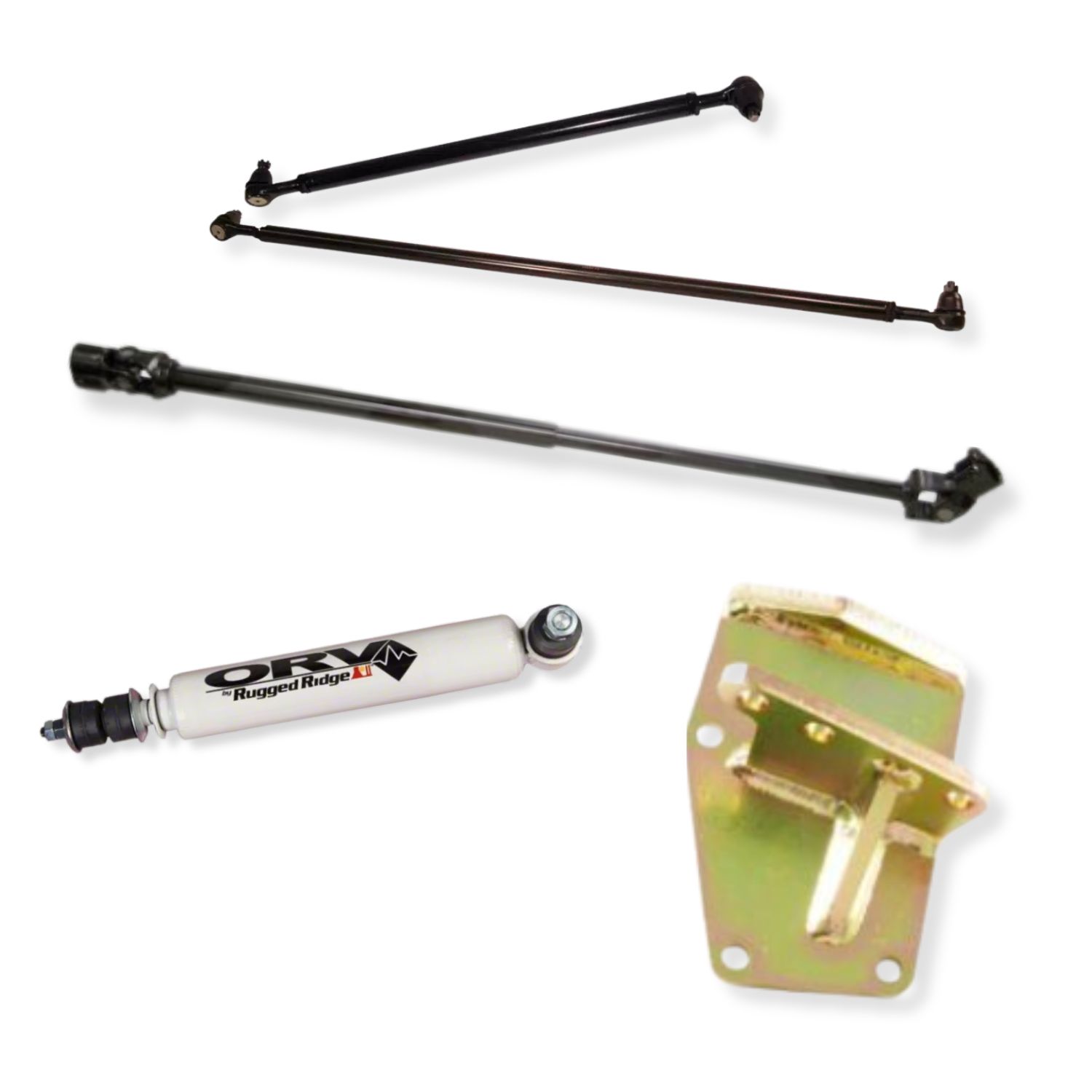
Ready to address the system rather than individual parts? See the Modern CJ steering kits -- complete linkage, shaft, and box mount kits for narrow and wide track CJs.